Cassie's Series of Adventures: Oslo


I was ready. I didn't have any expectations other than being awed. I wasn't even afraid of the astronomical prices that so many people warned me about - new country, new rules. Besides, the prices here couldn't be so drastically different from what I experienced in London or Reykjavik. Right?
 |
| These coin machines were surprisingly popular with street food vendors. |
I decided not to think about this. How could I when everything around me was so new? Once again, I felt this familiar sensation in my body. My energy levels were restored within seconds and my pupils widened. I was a child again, a vivid explorer, excited about embarking onto the journey into the unknown land. I could almost taste the mysteries unfolding behind each corner and the adventures that were about to happen.

The first corner disclosed a ticket machine where together with my partner we quickly exchanged our Norwegian kroner (101 NOK/ one way) for highly important pieces of paper. Soon we were on a train zipping past the Norwegian settlements. Once at the station, my inner guide quickly took over my soul and so I steered me and S. towards the Opera House (Operahuset) - an architectural gem and a symbol of Oslo. Here, while I heard it can offer quite delightful panoramic views, this time the area was too dark for us to see anything in particular. We spotted some lights and a dark mansion on the hill behind it and the reflection of these in the bay. We were alone. Only us and this modern slim building, mixture of white granite, white Italian carrara marble, white aluminium, glass and wood.

After my thorough inspection of the Operahuset (S. didn't seem to be too happy about how much time I spend on watching it from all the different angles), we came across another strange structure. Somehow I knew exactly what is was - a drying flake or a fish rack (known as hjell). I saw it once in a movie we watched and discussed as a part of my film studies. Now, if anybody ever tells you watching movies is a waste of time, tell him this story.
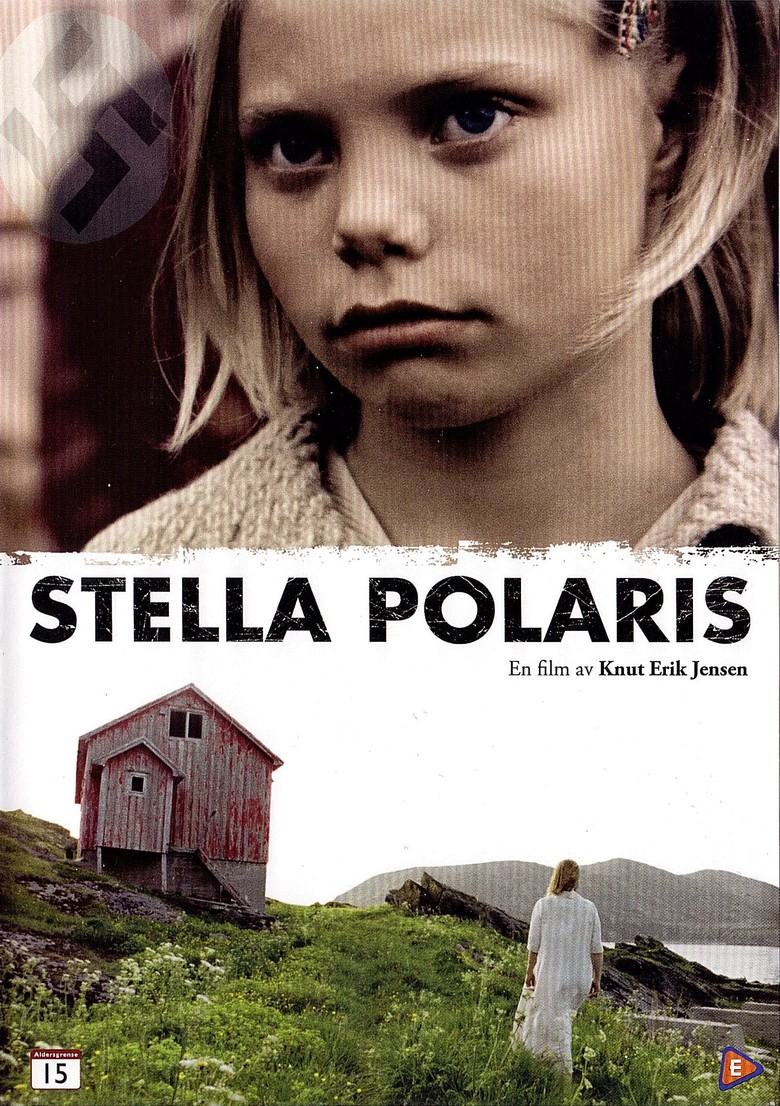
P.S. The movie is called Stella Polaris (1993, Knut Erik Jensen), for those of you who are interested in watching something a bit strange.


Yet, the hjell we came across differed from the ones I had in my mind in one matter. Namely, they were no fish dangling from its balks. Instead, there were pieces of clothing - a part of an art installation, I thought (Kaarina Kaikkonen is the name you want to check out). This, together with the red and blue lighting, gave the place a feel that was both nostalgic and quite spooky. That is also where, seemingly in the middle of nowhere, we spotted a person (!), a silhouette of a man, smoking next to the sign "Salt". Suddenly it all felt very much like a setting for a nordic crime story. I moved closer to S.

During summer months this place can get really crowded - a stage is build and concerts are held, but that is not all that this arena has up its sleeve. On a website www.salted.no/about/, I have found a nice quote from Guardian further describing the festival:
– The Guardian, SALT Sandhornøy 2014
While on the subject of art, also nearby, we encountered a piece of street art representing gorilla fishing for banana held by another gorilla. Unfortunately, despite the inside belief that I have already seen this somewhere, I cannot give you the name of neither the artist nor the artwork. If you know, please include it in comments down below.

Our next stop on the impressive quest through the city was Akershus Festning, a medieval castle/fortress. Due to the late hour we weren't quite able to go inside but if you visit Oslo, feel free to do so. And when I say free, I do mean free. If you can't, a walk through the fortress's courtyard is also a magical experience, especially in the pre-Yule period. In our case, once again, it turned out that we were there alone. In the silence surrounding this area, one could have heard a choir singing somewhere in the distance. As just before crossing the bridge to the fortress, my boyfriend decided a snowfight would be a good idea, now I was keeping my distance, trying to get rid of the ice that managed to fall behind my scarf. It was slowly melting on my neck sending a shiver down my spine. We had a long night of exploring in front of us. Beginning it with a snow fight wasn't the brightest in my opinion but then again, in contrast to him, I was very much used to snow. That's when I noticed a lonely Christmas tree standing in the middle of the field covered in snow. I stopped and stared. Some other movie scenes came to my mind - such as the Christmas Eves from "Catch Me if You Can" or "Lassie". Despite the ice melting behind my jumper, I felt warmth.


From Akershus, passing Cafe Skansen, we wandered a bit off the track and accidentally encountered an interesting sweets' shop Tynnkakebaker’n which was a great way to start our journey through Norwegian culture. The little Mormors Sirupstynnkake were really tasty - in a way they reminded me Dutch stroopwafels but in the same time the taste was quite new to me. The owners were really friendly and dedicated too - they introduced us to the city, its life, traditions, and, of course, to Sirupstynnkake. They told us that the government banned cars in Oslo city centre and the only reason why we saw them parked along the streets was because of some special Nobel-prize-related event. This was the first time I heard about such ban. I guess it is good for environment but not always so good for small businesses. I caught myself thinking "what will happen to all the car owners who happen to live in the city centre?".


Let's recap what we've covered so far: Central Station (Oslo S) > Operahuset > Salt > Akershus Festning > Tynnkakebaker'n. In relation to latter, just before we found ourselves engaged in the sweets-tasting experience, we came across a little shop haunted by trolls. In fact, during our stay in Oslo, we found many such establishments. These small somehow both cute and ugly creatures are a symbol of Norway. You can find them everywhere - from key rings, through figurines and fridge magnets to the true giant nearby Ski Jump called The Holmenkollen Troll. But did you know there are different types of what we usually recognise as trolls? For example, there are jötunn (giants and lords of nature), trolls (mythical magicians), þurs (hostile monsters) and risi (heroic and courtly beings). Ármann Jakobsson stretches the term even further to include beings such as witches, evil spirits, ghosts, blámaðr (blue men), magical boar, heathen demi-gods, demons, brunnmigi (better not get too much into explaining this one) and berserker (great in battles). In his book, he also analyses the etymology of the words related to modern-day trolls, such as trollskapr and ergi. You can read parts of his study for free at www.academia.edu, if you're interested.

 |
| Source of this one: Pinterest. |

Comments
Post a Comment